Category Archives: Flipped Classroom
My experience with my new flipped math classes!
The “Student-Created” Quiz
I have started giving quizzes where students create the problems by rolling dice.
Today’s quiz was over matrices. I provided blank matrices of fixed dimensions, and had the students fill in numbers by repeated rolling a single die. Why would I do this? The first reason is to avoid cheating, since everyone’s quiz now has different matrices. The second and more important reason is to give the students ownership in creating the quiz so that they are more engaged in solving it.
Rest assured, when I grade these, I will definitely be looking for anything suspicious (e.g., matrices with all ones, identical matrices on quizzes of adjacent students).
I have already solved the problem of having to answer the 30-something different quizzes myself, by creating a Microsoft Excel spreadsheet that does all of the calculations for me after I input each set of matrices that a student creates.
…
Now that I’m watching them work, it is fantastic!! Remember, they are taking a quiz over matrix calculations done by hand – potentially one of the most boring topics in the entire course, and they are 100% engaged!! The conversations are incredible!! They are actually teaching each other, which I love!!
Grading is even better!! Immediate feedback as I grade quizzes as they’re turned in. No one is comparing answers because they know that there is no point in doing so. The scores are excellent, without exception. I only had to take off a few points for a few students who made some minor miscalculations.
This is definitely something I will do more often. I know that some people view quizzes as an individual and quiet assessment, but I see it as a learning opportunity for them to communicate with each other, in their own language. Great job, students!!
Workshop with Alan November
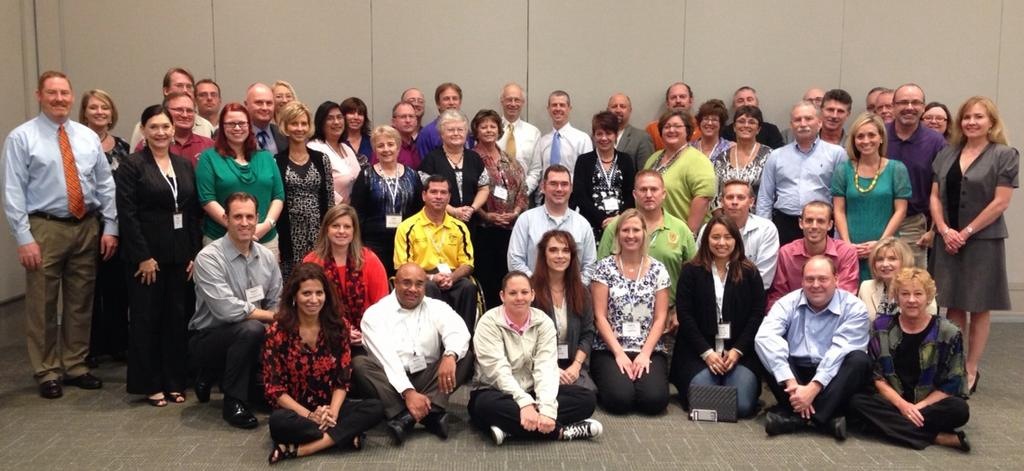
This past Wednesday and Thursday marked the end of a three-part series with Alan November. He is quite the visionary! He shared many more great ideas with us, and actually took the time to talk to myself and my two colleagues individually.
I told him that I started the year by using his “first five days” idea – teaching students how to use Diigo, QR codes, internet suffixes and country codes, EasyWhoIs, and the WayBackMachine. I also told him how successful it was, but that there was one concerned parent who wonder why their child hadn’t learned math in the first week of class. As a result, there is a good possibility that I will be doing a podcast with Mr. November later this year.
I must say I’ve learned a lot at these three conferences. At this last one, he shared an idea for AP classes that I plan on using for my IB senior math classes. The idea based on my goal: for every senior to pass the HL Math exams. The plan is to allow every student as many opportunities as they want (within a six weeks period) to retake a test until they earn an A. My initial reaction was that this man must be crazy, but then I thought about it. If a student wants to retake the test – same concepts, different questions – and shows it by making all corrections, then why not give them the opportunity. Plus, think of how many IB test questions they will see between now and the actual test! They will be more than ready and able to succeed! I am still waiting for formal approval from some of my higher-ups, but I’m excited about this!
I also learned that Ed.Ted is allowing teachers to flip their videos on the Ed.Ted website! They also have animators that will create a high-quality animation based on the text of the lesson you want to teach, for free! I’ve done a few lessons, none with animation yet, and it is so easy to do! There are some issues, and I’ve sent an email about them. It just started this summer, so I know it’s a work in progress, but it’s Ed.Ted, so I have total faith that it will get even better.
To Alan November and Brian Mull, I will miss learning from you. On one hand, I wish I could go to your three-part workshop again this year, but moreso I hope that my principal sends three more teachers who will learn, and renew their passion for learning, as much as I do as a result. Thank you so much!
Square Stories and Prime Stories


I went into this year wanting to accomplish a few things by trying a new approach. One of those things was to make everyone love math as much as I do. Or at least a little more than they already do.
The hardest ones to win over are those right-brained students who have a hard time with something as logical and “uncreative” as math.
So, during the second week, I gave them a creative project to work on. The idea came from Hemingway’s “six word story” that spawned a whole website devoted entirely to six word stories.
To make it more “mathy” I gave two options. They could either write a “square story” that had two two-word sentences, or three three-word sentences, and so on, or they could write a “prime story” that had three sentences, each with a prime number of words. They then were required to incorporate their story into a picture or video which they could send to me via email.
The results were phenomenal! I was so impressed, and I was actually able to get a sense of what each student likes, based on the subject of the story. This connection would never have been possible with a math worksheet or quiz.
As a result, my student feel more comfortable about math, even those who have not liked it for years. They know now that it’s not just about solving problems. It’s about looking at problems realistically and creatively from many different points of view before you begin to solve them. Yes, there is empathy in mathematics, and I think they see that now.
I have compiled the stories into two videos for you to enjoy. Let me know what you think:
Square Stories: http://youtu.be/sP4l0Sek4iI
Prime Stories: http://youtu.be/JXFdObr9Npw
Now is the Autumn of Their Discontent
It was bound to happen. A small group of students has approached me and asked me not to flip anymore. When I asked why, they said that they liked asking me questions while I was lecturing, so that they understood what I was doing before I moved on to the next step. I understand this completely. I would want to know the purpose and meaning of each step so that I could confidently transfer the knowledge to new questions of higher difficulty.
How do I respond to this? Since I was completely surprised by this, I reminded them that they can always email questions to me, or send me a message through Facebook. Both of these options are anonymous so they shouldn’t feel embarrassed about asking questions. I check email and Facebook frequently enough that I can respond fairly quickly.
I also reminded them that, as seniors, they will be graduating and going to college next year, and they will be expected to have at least read something before attending the lectures. Also, if the class size is large, like most college freshman classes are, they won’t be able to ask questions during the lecture. So, in a way, I’m preparing them for this situation.
I’m thinking of starting a Facebook group with each group so that they can discuss the lectures with each other, since it seems likely that several students will have the same questions. I’m not sure about using Twitter in this situation, since it is less anonymous.
Has anyone else experienced resistance to the flip? If so, what have you done about it? I have no intention of going back to traditional lectures after the success I’ve had so far this year, but I also don’t want to lose these troubled students, since they are among the most diligent and most principled students I have.
Parent Night
Last night was “Meet the Teacher” or “Meet the Parents” night. I got to see many parents and talk with them about how my class is different.
Having been to different workshops run by well-known advocates of the flip, like Alan November and Jon Bergmann, I know that it is not just about the videos, but rather it is about maximizing the face-to-face time I have with students. This allows me to differentiate and individualize in-class instruction so that each student has an opportunity to be successful. I was able to convey this message to parents last night, and they were thrilled!
I explained that the videos were beneficial for many reasons: any student who is absent can quickly catch up, any student who has trouble paying attention can pause and rewind the video, and any student who wants to re-watch videos to study for tests has the ability to do so. I explained that I am either creating the videos myself, or finding them from reputable websites and watching them to make sure the material covered matches the curriculum.
I also explained that at the beginning of class, a question is asked that is related to the video, but goes a little above the concepts taught in the video. This will split the class into three groups: the students who understand and are able to apply concepts to new situations, the students who understand the basics but need help going beyond, and the students who have trouble with the basic concepts. I can group students according to their understanding and work with those that need my help, while letting the “masters” work on their own.
Based on this explanation, and my answers to a few questions they had, parents unanimously welcomed the idea of flipping the classroom and are excited to see the results. What an encouraging night!
Second Week in Review
On Tuesday, I discovered that some students hadn’t watched the videos. I did give instructions on how to find them on the website, but maybe they weren’t clear. So I reviewed the instructions at the beginning and the end of each class. I guess I will be doing this at least for the next couple of weeks, until they get in the routine.
I also discovered that in my Algebra 2 class, the concepts in the video that I used (but didn’t create myself) and the questions I asked in class did not match up. That just means I have to do a better job at syncing them, by either picking better videos or asking better questions.
My seniors are reverting back to old habits from last year. They are giving up after not understanding for a few minutes. For right now, I am giving more “guidance” than actual step-by-step instructions, but I need to let them suffer more so that they can learn through their frustration. Funny, I don’t have this problem with my underclassmen.
Today, I received two Netbooks for my classroom. Students will use these to watch videos, in case they didn’t have time, or they don’t have internet access at home. This is great, because I used to have to give up my teacher computer for these students.
In other exciting news, I have teachers starting to implement the flipped model in their classes after just learning about it in August. I have volunteered to help those who are getting started, just to make sure they get the whole idea, not just the videos.
Overall, I still LOVE the flip!! I have had great conversations, answered thoughtful questions, and held many small group lessons with students that were struggling. Classroom management is still a breeze, with students knowing exactly what to do, and always staying on task because they know I am watching them.
The real test will be next Wednesday when they … test.
Flipping: The First Week
Well, the first week of flipping my classroom is almost over. I’ve noticed so many improvements!!
First, I stressed the importance of watching the videos right from the first day. I told students that I would not be lecturing during class, so if they didn’t watch, they would be lost. As was expected, there were a few students in each class that forgot to watch, but they watched in class on their smartphones or laptops, and were still able to complete the activity.
Second, classroom management is a breeze!! I realized that the reason I spent the first five minutes of class trying to get the class to pay attention was because they didn’t know what they were supposed to be doing, so they did what they wanted – they socialized. Now, at the end of each video, I tell them what they will be doing in class. All supplies are laid out for them and they can get started even before the bell rings!
Mind you, we haven’t begun the actual math curriculum yet, just technology tools, so there wasn’t a whole lot of confusing concepts to explain. Also, I haven’t given an “opening question” for the same reason. We’ll see how things change during week two! But so far, I am very excited about how successful my students will be this year!!
First Week of Classes
Pursuant to a discussion at a November Learning conference this summer, I’ve decided to spend the first week of classes teaching my IB students about some internet tools and tips for their research, both in IB and in college.
Here’s the itinerary for the first week:
Monday
- Expectations of my class
- Sample video
- Navigating my course website
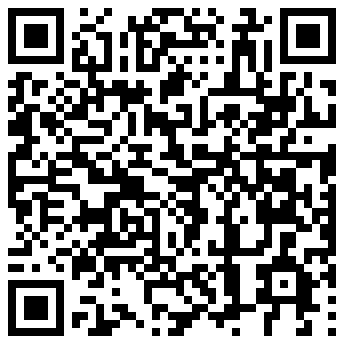
- Introduction to QR codes
Tuesday
- Treasure hunt activity using QR codes
- Introduction of math poetry project based on www.sixwordstories.net

Wednesday
- More efficient Google searching
- Country codes and internet suffixes
- Using the “site:” command
Thursday
- Introduction to Easywhois.com
- Introduction of Archive.org (with the WayBackMachine)

Friday
- Introduction to Diigo

We can always start math next week, right?
Pictures of My Flipped Classroom
Here’s my room!

My tables are set up so students can work in groups of four. Students aren’t all facing the front of the room, because they don’t have to. I’m not the center of attention anymore. They need to be facing each other, because that’s where the knowledge and collaboration will be coming from.
I did move most of the tables against the wall so that they were near the electrical outlets in the room. I figure if I want students to bring electronics into the room, they should have a power source to use them.
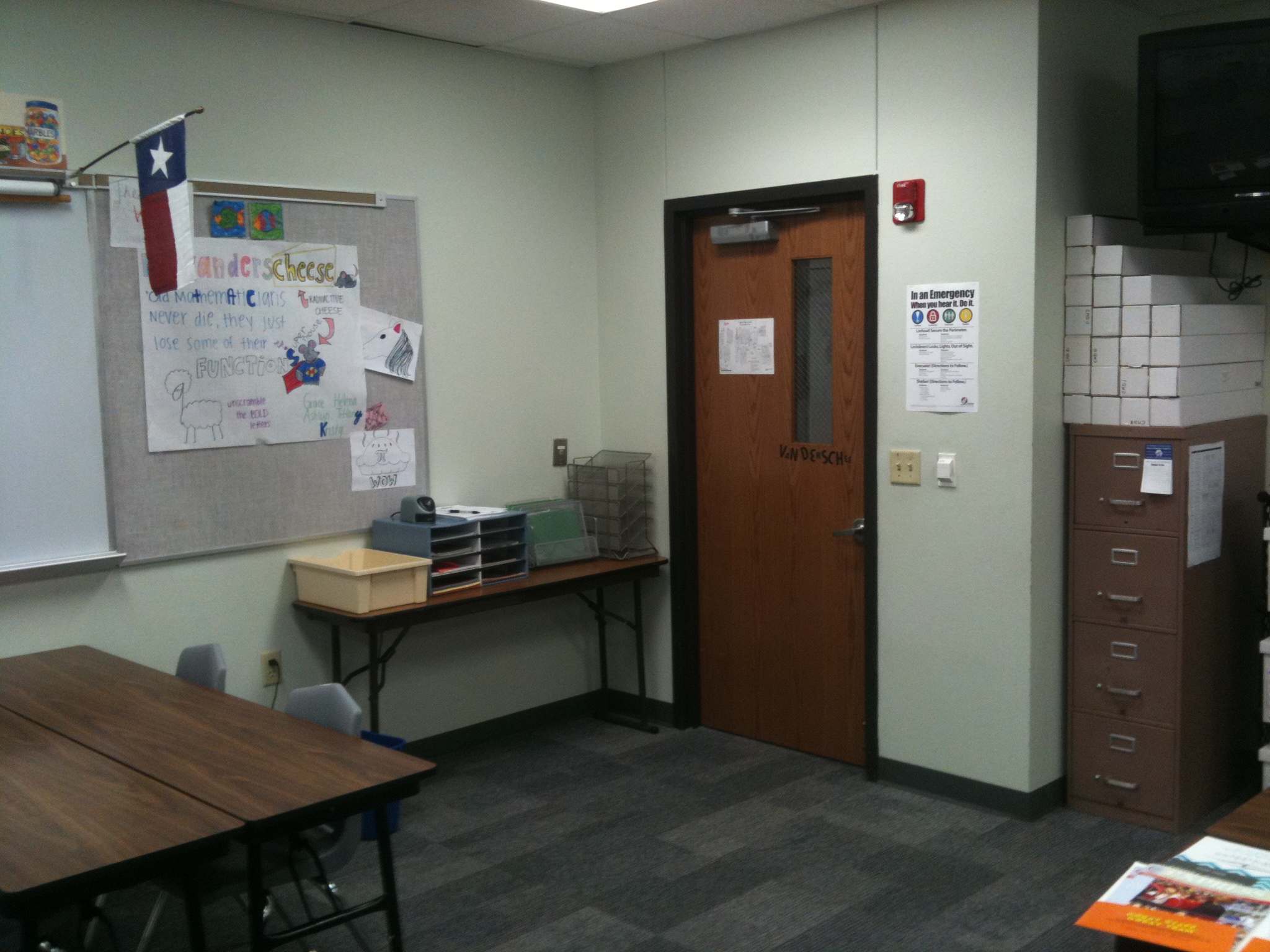
The IB learner profile is up, plus I have a vision statement posted above my SmartBoard, but that’s it. This is their room, so they will fill the walls with their work. It will look much different in May!
I’ve got my shelves filled, not only with math books, but with puzzle books and random novels. It’s kind of a nice area for a couple of students to chat.
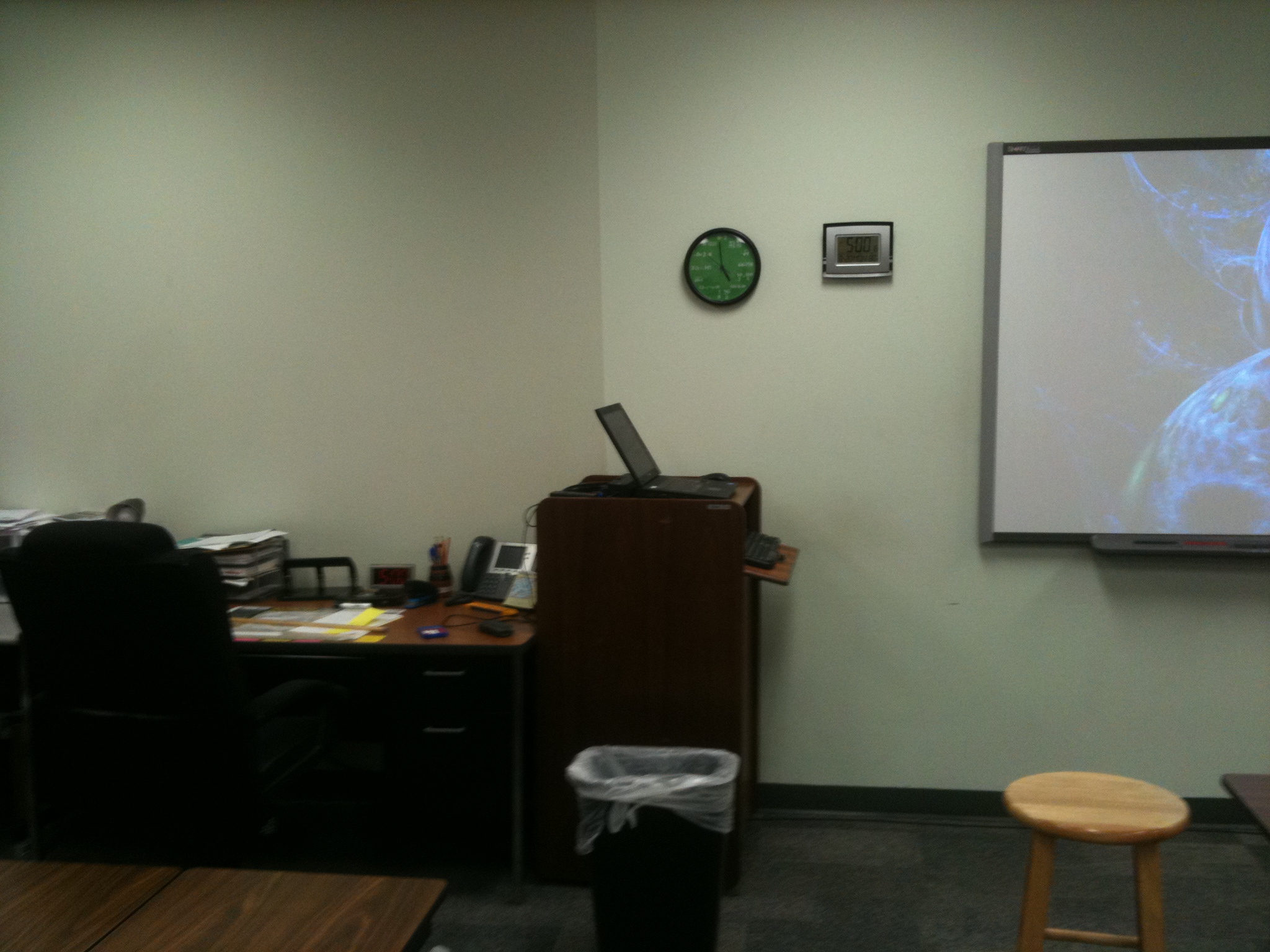
My teacher’s desk is pushed against the wall to remove that student/teacher barrier. Now I can go to the students instead of them coming to me.
I still don’t have my rolling whiteboard yet, but I’m keeping my fingers crossed.
Well, that’s my room! I haven’t done everything I wanted to do, but I’ve done all of the necessaries, and I’ll do the rest as the year goes on. Hope you like it!!
The Debate: Facebook or Twitter?

One thing that is very important to me is the ability to communicate with my students during the school year. I think this is critical in a flipped classroom because I want students to ask me questions about the videos they’ve watched, or about the closing “teaser” question that I pose before I dismiss them from my class that day.
In the IB program we have ManageBac, which compiles a list of upcoming assignments and tests. I also (thanks to my colleague) have Google Moderator on my Google site. But honestly, how many students are going to check those on a regular basis?
So I took the opportunity to email my students over the summer and ask them which they would prefer: a provate Facebook group where they can discuss the current project or upcoming test, or a Twitter hashtag to follow discussions within our class and from other IB students around the world.
The results were rather interesting. Out of the 50-some responses I got, only one vote was for Twitter and the rest were for Facebook. That’s not even the interesting part! Students told me the reason for their preference. They said things like: I don’t have a Twitter account, I don’t use Twitter, I don’t know how to use Twitter, and so on.
Is it possible that I am even slightly ahead of my students when it comes to technology? I never thought I would see that happen!!
So yes, my plan for August is to create a private Facebook group… for now. But I now feel obligated, and rightly so, to teach my students about Twitter – what you can do with it, how you can connect with people around the world, how you can find resources that will help with any research assignment – the list is endless!
So, while my curriculum spans almost the entire year, I think I will have to make adjustments and include lessons on Twitter, so that students are better connected, better informed, and better communicators.
I welcome any thoughts that anyone has about how you communicate in your classroom. I’m sure there are options out there that I either haven’t considered or don’t know.
First day is almost here, fellow flippers!!


 blue shirt khaki pants